Alex M. T. Russell and the evidence-first lens
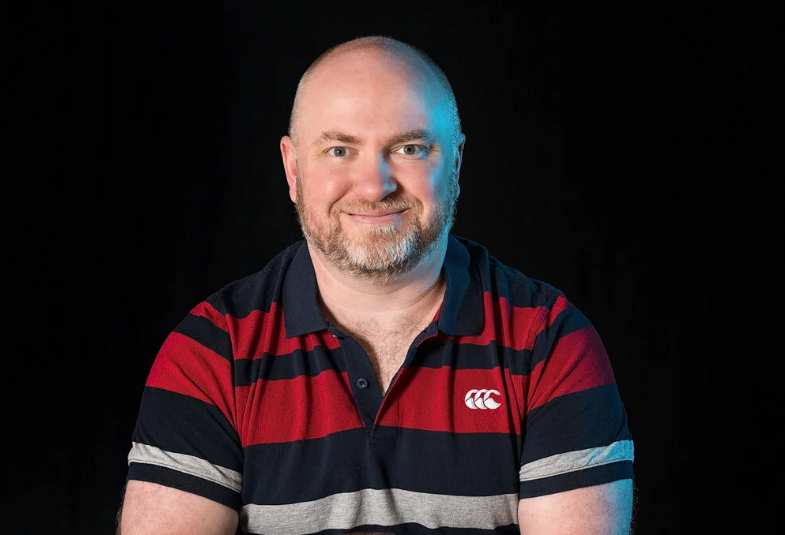
In 2026, an author page has to do more than introduce a name. It has to show why that name deserves reader trust, what intellectual framework stands behind the articles, and how that perspective fits an Australian audience. Alex M. T. Russell stands out because his public profile is built not on generic iGaming copy, but on research into gambling behaviour, technology-driven risk, and harm minimisation.
A researcher before he is a byline
On his own website, Alex M. T. Russell describes himself as a gambling researcher based in Sydney, Australia, and identifies his work with the Experimental Gambling Research Laboratory at CQUniversity Australia. On that same page, he says his core focus is how technology is changing gambling, who is most at risk from those changes, and what can be done to minimise potential harm. CQUniversity’s public repository also lists him as a Principal Research Fellow, which confirms a current institutional research role in the same ecosystem.
That combination matters because it gives this author page substance from the first screen. Readers are not being introduced to a vague editorial persona or a manufactured brand character. They are seeing a researcher whose public identity is tied to evidence, behavioural analysis, and the Australian context in which gambling is debated, regulated, and studied.
Before going deeper, it helps to map the essentials in one place. The table below pulls together the public-facing facts that shape how Alex M. T. Russell should be presented on a Bonobo Casino author page in 2026. Every line is grounded in publicly available sources rather than promotional guesswork.
| Profile element | Publicly available detail in 2026 |
|---|---|
| Full name | Alex M. T. Russell |
| Public base | Sydney, Australia |
| Research identity | Gambling researcher |
| Institutional link | Experimental Gambling Research Laboratory, CQUniversity Australia |
| Repository role label | Principal Research Fellow |
| Core public focus | Technology and gambling, risk exposure, and harm minimisation |
| Extra public interests | Certain video games, screen time, loneliness, taste and smell perception, and wine expertise |
| Public-facing extras | Downloadable publications, teaching resources, and research participation links |
Why his perspective feels different
Many author pages in this niche rely on experience claims that sound polished but remain impossible to verify. Russell’s public material works differently because it points back to research questions, methods, and outputs that can actually be inspected. That immediately changes the tone of the profile from promotional to evidence-led.
His own summary is unusually clear. He says his focus is on how technology changes gambling, who is most at risk, and what can be done to reduce harm, which places behavioural science at the centre of his work rather than surface-level product description. For a reader, that signals an author likely to care about mechanisms, incentives, and consequences, not just features and claims.
The Australian anchor
This is also an Australian profile in a real sense, not just by geographic label. Russell publicly places himself in Sydney, and his work is tied to CQUniversity Australia and national or state-level gambling research activity. That gives the page local credibility for readers who want commentary shaped by Australian realities rather than recycled offshore templates.
The behavioural lens
The public wording on his site is revealing because it centres technology, risk, and harm minimisation in one sentence. That suggests a way of thinking that looks beyond whether a product exists and instead asks how design, access, and promotion change user behaviour. It is exactly the kind of lens that makes an author page feel serious in 2026.
What his publication trail says in 2026
Russell’s public publications page is not a thin list used for appearances. It shows recent and continuing work across gambling harms, wagering promotion, affected others, youth gambling, interactive gambling, and methodological questions. As of 2026, the page includes accepted late-2025 work on longitudinal causal inference, gambling harms scales for affected others, and wagering affiliate marketing, alongside a 2025 paper on the cost of direct marketing from wagering operators, tipsters and affiliates.
That publication trail gives this author page real depth. It shows that Russell’s name sits alongside substantive themes in current gambling research, not just archival work from years ago. It also shows range, because the listed topics move from public health and social harm to measurement, messaging, and the economics of promotion.
Before the next section, it is worth isolating the themes that appear most clearly in his public record. These themes help explain what kind of author readers are dealing with and why his byline can carry more weight than a standard review-site profile.
- gambling harms and their measurement, including effects on affected others
- wagering marketing, affiliates, and direct promotional pressure
- simulated gambling, social casino crossover, and youth exposure
- smartphone betting, interactive gambling, and digital behaviour patterns
- public health, stigma, and safer gambling strategy design
Research that speaks to current industry questions
A strong author page should not just say that someone is experienced. It should show the live relevance of that experience. Russell’s public list does that by including work on direct marketing pressure in wagering, gambling harm to affected others, and affiliate marketing described in one title as the “Wild West” of wagering promotion, all of which remain highly relevant to gambling discourse in 2026.
A record that moves beyond one niche
His publication page also shows breadth across adjacent topics that matter to modern gambling analysis. The listed work covers simulated and traditional gambling, parental factors, smartphone betting, youth gambling, consistent gambling messaging, opt-out pre-commitment, and gambling advertising during and after COVID-19 lockdown. That breadth strengthens the sense that his perspective is systems-based rather than trapped inside one narrow format.
Public work that reaches beyond journals
An effective author page should also show whether the person behind the byline can communicate outside academic publishing. Russell’s public website does exactly that. It offers access to downloadable publications, participant recruitment through the Leisure and Wellbeing Study, teaching materials on statistics, and practical resources for students and early-career researchers.
That is important because it shows a second layer to his profile. He is not only publishing and collaborating, but also translating methods, explaining tools, and creating entry points for others to engage with research. For an author page, that makes him easier to position as a guide, not just a credential.
Teaching and method
On his teaching page, Russell says he has been building material around statistical analysis and statistical software, with workshops on Jamovi and R. On his main page, he also says he mostly teaches statistics and is developing detailed resources for researchers from undergraduate level through to established academics. That adds a methodological dimension to his profile that many gambling authors simply do not have.
Resources for emerging researchers
His resources section is equally telling. There he says the aim is to provide pointers and guidelines for things he has learned along the way, especially topics students or early-career researchers may find confusing, and the topics listed include surveys in Qualtrics, Jamovi, R, journal choice, recruiting participants, and reference managers. That signals a working academic voice that is organised around clarity, process, and practical application.
Collaboration adds weight to the profile
Russell’s CQUniversity repository page publicly lists collaborators including Nerilee Hing, Matthew Browne, Matthew Rockloff, Philip Newall, Sally Gainsbury, and Nancy Greer. That matters because author credibility is often strengthened by the company a researcher keeps, especially in a field where collaborative projects shape much of the strongest evidence. This is not a solitary profile operating in isolation, but part of a recognised research network.
That collaborative footprint is visible in the publications as well. His public record repeatedly places him inside multi-author work on gambling harms, wagering marketing, youth gambling, public stigma, and national or state-level Australian studies. The result is a profile that feels connected to the broader research conversation instead of detached from it.
A 2026 signal of relevance
One of the clearest indicators of current relevance is his appearance as a named author on the NSW Gambling Survey 2024, posted in 2025 through CQUniversity’s repository. The public record describes that report as a comprehensive snapshot of gambling behaviour, problems, and harm in New South Wales, based on 10,000 adult participants, commissioned by the NSW Office of Responsible Gambling, conducted by the CQU Experimental Gambling Research Laboratory in partnership with Ipsos Australia, and peer reviewed under the Office’s oversight. That is not peripheral output. It is the kind of large-scale evidence base that gives an author page real authority in 2026.
For a Bonobo Casino author page, this matters more than decorative biography. It shows that Russell’s byline can be framed around current public-interest research, large datasets, and policy-adjacent evidence. In other words, the value of the profile is not only that he writes about gambling, but that his public work helps explain how gambling operates in the real world.
What readers should expect from this author page
Readers coming to an author page want more than a career summary. They want to understand the kind of judgment they can expect when they see the same name attached to articles. In Russell’s case, the public record supports an image of an evidence-first writer whose work is shaped by behavioural research, Australian context, and a sustained interest in how digital environments alter gambling risk.
That does not make him a generic industry spokesperson. If anything, it suggests the opposite. The most credible way to present Alex M. T. Russell on a Bonobo Casino author page in 2026 is as a researcher-shaped editorial voice who values method, context, and practical clarity over noise.
Final perspective
Alex M. T. Russell is not difficult to position well, because the public evidence already does most of the work. He is publicly tied to Sydney, CQUniversity, the Experimental Gambling Research Laboratory, a substantial publication record, teaching resources, and collaborative Australian gambling research that remains relevant in 2026. That gives this author page exactly what it needs – an identity grounded in expertise, not in branding alone.